 Countertop Harvest
By the Countertop Harvest team · Last updated
We may earn a commission from links on this page. Full disclosure below. · How we pick products
Indoor basil usually struggles from too little light, too much water, or cold. Give it the brightest spot you have (or a grow light), water only when the top inch of soil is dry, and keep it away from cold windows and drafts.
Symptom → likely cause → fix
| Symptom | Likely cause | Fix |
|---|---|---|
| Tall, leggy stems, small leaves | Not enough light | Move to the brightest window or add a grow light |
| Yellow lower leaves, damp soil | Overwatering / poor drainage | Water less; use a pot with drainage holes |
| Drooping, dry soil | Underwatering | Water thoroughly, then check every few days |
| Black or dark spots, wilting | Cold or cold-damaged leaves | Keep away from cold glass and drafts at night |
| Wilting at the base, mushy stems | Root rot | Repot in fresh, dry mix; trim rotten roots |
| Flowers forming, leaves turning bitter | Bolting | Pinch off flower buds; harvest from the top |
| Tiny bugs, sticky leaves, webbing | Pests (aphids, spider mites) | Rinse leaves; isolate the plant; check undersides |
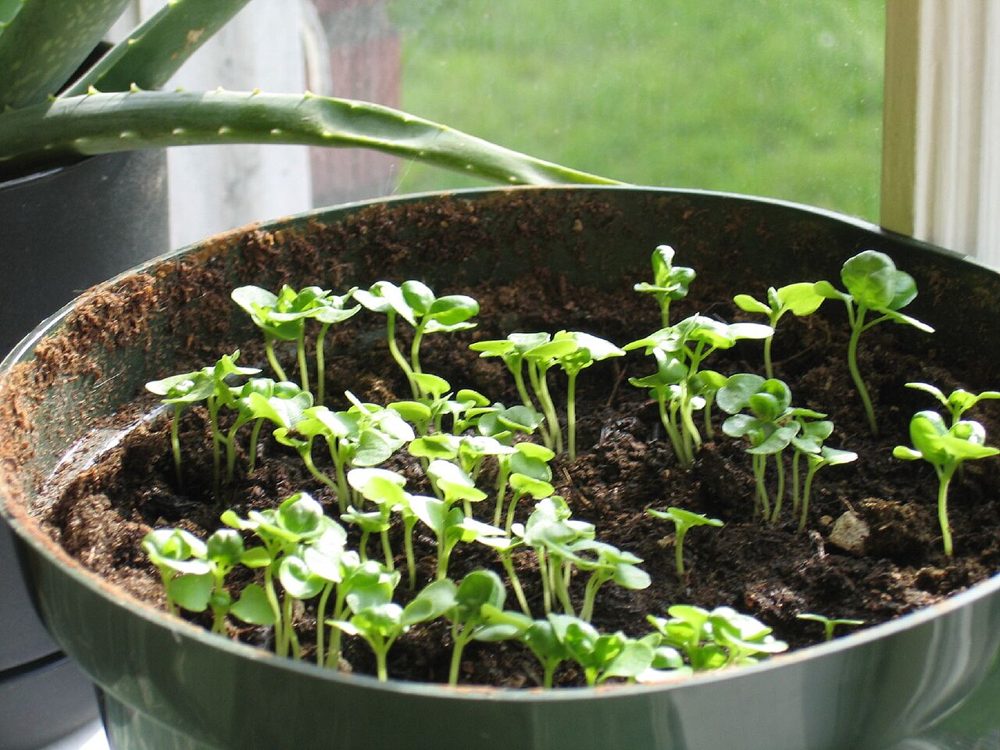
| Grocery-store basil dies within weeks | Too many seedlings in one pot | Split into 2–3 pots |
Fix #1: light
Basil is one of the most light-hungry kitchen herbs. A north-facing or shaded window rarely does it, especially in winter. A clip-on full-spectrum LED on a 12–14 hour timer is a common, inexpensive fix.
Starting over? Follow how to grow basil indoors, and compare lights in our grow light buying guide.
Fix #2: watering
Push a finger into the soil. Dry an inch down? Water until it runs out the bottom, then empty the saucer. Still damp? Wait. Pots without drainage holes are the most common cause of soggy roots.
Fix #3: warmth
Basil dislikes cold. Windowsills can get much colder than the room at night, so pull the pot back from the glass on cold evenings.
Fix #4: pinching and harvesting
Snip just above a pair of leaves, and the plant branches into two stems. Taking the top regularly keeps basil bushy and delays flowering.
What helps (optional)
Most basil rescues cost nothing: more light, better watering, a warmer spot. If you want a few tools that make those fixes easier, these are the ones that match the problems above. Pick only what fits your issue.
LED grow light with timer
The most common basil problem indoors is too little light. A full-spectrum light on a timer fixes leggy, pale growth.
Soil moisture meter
Takes the guesswork out of when to water, so you avoid both drooping and soggy roots. Your finger works too.
Pots with drainage holes
Basil hates sitting in water. A pot with holes plus a saucer you empty is the simplest root-rot prevention.
Insecticidal soap
For aphids, mites or thrips. Pick one labeled for vegetables and herbs and follow the label.
Yellow sticky cards
Catch fungus gnats and whiteflies and show whether numbers are going up or down.
More detail: best grow light for indoor herbs and our indoor herb pest control guide.
When to start over
If stems are mushy at the base and the roots are brown and soft, starting fresh is often faster than rescue. If you keep losing basil to light and watering, a smart garden with a built-in light and reservoir takes both off your plate.
Compare compact smart gardens →
Bugs on your basil? See our indoor herb pest control (IPM) guide and how to get rid of fungus gnats.
Product spotlight: Lost Coast Plant Therapy for indoor herbs.
Frequently asked questions
Why is my indoor basil dying?
Usually too little light, too much water, or cold.
Why are my basil leaves turning yellow?
Yellow lower leaves with damp soil usually mean overwatering or poor drainage. Water less and use a pot with drainage holes.
Why does grocery-store basil die so fast?
There are too many seedlings in one pot. Split it into 2–3 pots.
How often should I water indoor basil?
Water only when the top inch of soil is dry, until it runs out the bottom, then empty the saucer.
How do I stop basil from flowering?
Pinch off flower buds and harvest from the top, snipping just above a pair of leaves.